Showing posts with label preparing for NaNoWriMo. Show all posts

Saturday, October 31, 2020

NaNoPrepMo - Eve


create your NaNoWriMo project page 
 
 
Click on the  "Announcing my novel" or what ever it says

It will be asking
-name of your project - that's the name of your book
- what is the project status? (prepping, in process, drafted, completed, published)
- how much privacy do you want?
- What type of project is this?
- what is the genre?
- project summary
- project excerpt
- link to your Pinterest board
- link to your project's playlist (I don't believe in playlists, or listening to music while I write, but you might do.)
- cover
 
If you have followed this blog this whole month, this will be an easy peasy thing to do for you :-D

No, go and celebrate Halloween, sleep well, wake up early and go write!

Monday, October 19, 2020

NaNoPrepMo - Example

 Idea:


When this popped up on my Pinterest, I had just seen the Eurovision Song Contest. The winner was Conchita Wurst. The latest tv series I watched was Miss Fisher Investigates, and right before that Firefly. So - I'm a singing cross-dressing lady sleuth in Firefly world. Huh. I kind of like that.

I know painfully little about ANYTHING associated to this!

I don't know how to write mysteries, so I'll research that.

Writing a Mystery Novel - 7 Elements Your Story Needs

Notes from "The Agatha Christie Code" 

Essential elements of a mystery story

So... the characters... the sleuth, of course. Miss Firefly. He is not a transwoman, he is a crossdresser. Or... maybe in future that is not a thing. I mean, it's a man who likes dressing up in beautiful dresses, jewelry, make-up and likes having his hair pretty. Maybe in the future people have stopped assigning gender to clothes.

The setting - Firefly world. Now, the Firefly is about the ship, but I would set my lady sleuth on a city on some planet, like New Melbourne?

I know nothing about Australia. So, maybe not New Melbourne. Just a random space city, somewhat placed in Firefly universe. 

Firefly is a space Western - everything is sort of set in 19th century "wild west", even cities, though... this is Persephone City...

I suppose I don't much need to care about that. Just set it in a futuristic city with Wild West influences. 

So... how can I show it's Firefly universe without it being that, because I don't have the right to use that world? If I wrote Firefly fan fiction, it would have the characters from Firefly. I could do that, and then change enough details to make them "not theft"... though it would be that anyway. *I* would know it's a theft. I would need to remove it at least twice. Also because I really like Firefly and the characters.
With "twice removed" I mean, that miss Firefly cannot know any of the characters, cannot meet any of them, but could know someone who does. Like Kaylee's sister's friend, or doing business with someone who has done business with Malcolm, knows an old soldier, something like that. 

Now, this isn't that important. I can change the setting to something I like better, that's easier to write about, that supports my story, but so far this is what we work with.

So, every mystery works the same, despite of setting and characters.
There is a crime, and then the crime is being solved. The reader is solving the crime together with the detective, and the author gives all these clues and red herrings and tries to make it interesting...

Hmm... what would be an interesting crime for our lady detective to solve? I could make it easy for me and rewrite an Agatha Christie... instead of Hercule Poirot, we have our Curtisanne Luciole. 

How will a transvestite heroine change the things? I would like the world to have evolved so that people don't care what other people are wearing, and in fact the transvestite heroine would have no what so ever effect on anything. I suppose it would be mostly because they prefer using high heels and it's not quite functional and practical always... and skirts and long hair and all that. Women's glamorous clothing isn't meant for anything but looking glamorous. So... stopping to curse her shoes, hitching up the skirt to be able to climb over a fence, and so on.
Miss Fisher was supposed to be very interested in fashion, but she was wearing pants most of the time. Miss Luciole could be using their "vanity" as a disguise and distraction. If you correct your makeup all the time, no-one notices that you are using the mirror to see what happens behind your back. And if you are a ditzy blonde, people won't take you seriously.

So... I took a couple of old mysteries, and here's my thoughts about the plot.

- Mika Waltari: Who Killed Mrs. Skrof? (1939)
- Agatha Christie: Flock of Geryon (1939-42?)
- G. K. Chesterton: The Eye of Apollo (1911)
- Dorothy L. Sayers, Whose Body? (1923)

the victim: an old religious woman, a bitch, she lives with a grand-daughter, who is really badly beaten, forced to live ascetically. The old woman is rich and owns a rental house, and lives in the highest floor. Nobody lives in the floor below her, because she wants privacy.
At the night she dies, the grand-daughter is not home.
The home is very minimally decorated, but there are some very expensive artwork on the walls and some expensive sculptures and such. A few, very few.
The apartment is very clean, the sculptures have left spots on the surface after dusting.
The bitch is a combination of Carrie's mother and Mother Dearest.

She has a nephew, the last living relative (not the grand-daughter, she is a girl and our bitch is misogynist. God made women to make babies.) She thinks family is important, so she leaves her riches to her nephew and grand-daughter IF they get married. If not, everything goes to the religious cult.

That's sort of the Father Brown story with the sun cult person.

That person is charismatic but like dough. With cold, dead fish hands. Cold, blue eyes. No sense of humor. 

He has moved to the apartment house and visits the old lady often. The girl is not often home, she goes to school, and when she comes home, she basically closes herself in her room to study.

Flock of Geryon? (Agatha Christie: Labours of Hercules)

Now, the grand-daughter and nephew aren't that far apart in age. He is just a couple of years older than she is. The old witch's sister was almost 20 years younger than she was, about the same age as the old witch's son, the father of the girl.

The nephew is an artist, perhaps even a drag queen, and lives with someone else... miss Firefly? This could be how she gets involved...

Lets make it into a closed room mystery... How? I need to somehow limit the suspects into the people who live in the house. What if the doors are locked during the night, what if everyone entering is registered into a computer, what if there are bars in front of the windows, that can be opened only by a special key, for cleaning, so no-one can enter or exit through the windows without the key? What about balconies? What if the city is so dirty no-one uses balconies in the city? 

Let's say the granddaughter has one of these window keys, because she isn't only the student, she is also her grandmother's housekeeper, and responsible for cleaning the windows, and she sneaks out at night to meet her beau. She doesn't want to marry the nephew.

Let's say the nephew is the murderer, and he tried to murder everyone in the apartment, both the old lady and the girl, to inherit the old witch's money. He didn't know the girl wasn't in the apartment, because the door was closed and she hadn't left the room through it, and he didn't know she had the key to the window.

Let's say that he was visiting his aunt at evening, and left the gas on, when he left the apartment. The old lady didn't notice anything, and died, and the girl was gone and then slept with window open, so she didn't get as much gas, and survived. I need to check if that theory works.

The red herring is the cult leader. I need to put in enough evidence to incriminate him. Maybe he even planned killing her. Maybe he even did something to kill her, like give her something poisoned, but she didn't eat it, because stoicism or something.

Maybe someone else ate it and was killed? That would be another red herring. Who?

What if the nephew took the delicious thing with him, not wanting it to go to waste, and that's how he's caught.

So... my biggest problem is the writing. I'm really good at ideas and developing and planning and all this, but writing itself... *sigh*
So, I'll just take the beginning of the Lord Peter Whimsey novel, and run with it. Because it fits.

CHAPTER I    

“OH, DAMN!” SAID LORD Peter Wimsey at Piccadilly Circus.
“Hi, driver!”  
The taxi man, irritated at receiving this appeal while negotiating the intricacies  of turning into Lower Regent Street across the route of a 19 ’bus, a 38-B and a bicycle, bent an unwilling ear.  
“I’ve left the catalogue behind,” said Lord Peter deprecatingly. “Uncommonly  careless of me. D’you mind puttin’ back to where we came from?”  
“To the Savile Club, sir?”  
“No—110 Piccadilly—just beyond—thank you.”  
“Thought you was in a hurry,” said the man, overcome with a sense of injury.  
“I’m afraid it’s an awkward place to turn in,” said Lord Peter, answering the  thought rather than the words. His long, amiable face looked as if it had generated  spontaneously from his top hat, as white maggots breed from Gorgonzola.  The taxi, under the severe eye of a policeman, revolved by slow jerks, with a  noise like the grinding of teeth.
The block of new, perfect and expensive flats in which Lord Peter dwelt upon the second floor, stood directly opposite the Green Park, in a spot for many years
occupied by the skeleton of a frustrate commercial enterprise.

Our lady Firefly sits in the taxi on their way somewhere, they have their arms full of things, like wigs, and bags and shoes and clothes and things, and they go through them the last time in the taxi, and notices that something is missing. So she tells the taxi driver to turn around and go back so that they can get what they forgot.


Sunday, October 18, 2020

NaNoPrepMo - create the cover of your book

Find 10 best book covers you know. Analyze them.
What are the most common colors?
Is there some shapes that are shared? Elements of composition, like the name is off-center, or framed, or in the center?
illustration style?
graphical or realistic?
Font? Calligraphy? Composition, position, size? Where is the title compared to the author name?

I like blue covers, preferably slate blue and teal, ornamental, and calligraphy. And circles and silhouettes. And curlicues. And woodcuts. And... :-D


Book cover typography

Book cover design 
How to nail your book cover 

Saturday, October 17, 2020

NaNoPrepMo - Soundtrack

 I don't usually do this, I like to read and write in silence, but some people do, and you might find it inspiring as well. So I did this for this year.

I chose the soundtrack from a movie that is similar to what I am writing, and start playing that, saving the songs that fit the writing on a separate playlist, saved songs and music pieces that I came to think about, looked at the recommendations of similar pieces, listened to other soundtracks, and this is what I ended up with. I look at it a bit like a soundtrack of the movie my book will become :-D

How to make a writing playlist for your novel

How to Create a Novel Soundtrack for your Book

How To Create an Awesome Music Playlist For Your Novel

A Personalized Soundtrack for Your Novel: Creating Writing Playlists

How (and Why) to Make a Book Playlist 


Thursday, October 15, 2020

NaNoPrepMo - Story Structure

 You have to remember that story structure exists just in case you don't know what to write. You shouldn't force an existing story into any kind of structure. Trust your sense, and remember that storytellers always beat writers. Always.

E.A.Deverell has explained it all very nicely: Plot Structure by Lady Writers
She has done a very thorough job by collecting all the story structures she found in one place, and explaining them a little as well.

She has a nice plotting tool called "One Page Novel"
It is based on the idea of that you start at the ending.
You write the beginning as sort of a mirror image of the end.
Then you write the middle point, called "shift", which is about the shift (duh) of the MC from the person they were in the beginning to the person they are going to be in the end.
then you write the trigger, or the inciting incidence, which kicks the MC on the road of changing
The Quest tells about "giving" them what they need to become the person they will be in the end - they will meet the necessary people, they will learn the necessary skills, they will be met with events that force them to change their thinking, attitudes, priorities and all that.
After that you'll write The Power, which is sort of the mirror image of The Quest - whereas in The Quest the character was pursuing what they THOUGHT they needed and wanted, in The Power they are using what they KNOW they need and want.
After that you write The Bolt, which is sort of what is needed to happen to kick some sense to the MC, to shake off the illusion of control, knowledge and confidence. At that point the MC will be deceived, distracted, diverted, the plans they made during the Quest phase are spoiled, foiled and destroyed, proven not to work, because they were built on false premises. Think that this is what leads you from The Quest to The Shift. This is what makes them realize what they need to realize to be able to shift.
Then you write The Defeat, which is the "all is lost" moment. The story forces the MC to sacrifice something to burn away the illusion that made them lose in The Bolt. This is The Phoenix moment. You will die, a painful, horrifying death, you will be hanged from the meat hooks at Underworld and skinned alive, you have to shed your armor and be completely naked to the meat and bones, completely open, to be able to be born again.

All these stages are mirroring and connecting each other. The beginning and the end mirror each other, The Bolt mirrors the ending, The Quest The Power, everything is connected, everything causes everything else, it's a dance of repeating and reflecting movements, all focused on the main character's growth and change... The bigger the ante, challenge, suffering, the bigger the impact.

You have a character to whom things happen.
This character goes on with their life. Everyday normal. Often there's something about this life they aren't quite happy about - often they are not at all happy about it, and want it to change. Sometimes they are quite happy about it.
Then something happens. Something that forces them out of the "everyday normal", whether they want or not. This force has to be characteristic for your character, and show the reader what makes your character special. You can't just throw an earthquake on your character, because some would just lay down and die if something so devastating happened to them. What would make your character react and leave the safety of familiarity? You use either the carrot and lure them out of the safety with an opportunity they can't resist, or the stick, and make it clear they have to act or die, lose what they most want forever.
Make them want something so bad they will act to get or to keep it.
So, they act and things happen because of that.
Here we get into the character development area. You do as you will. It isn't necessary, but it gives depth to your story. The idea is that during the first half of your story, the character is innocent, well-meaning, full of beliefs, ideas, preconceived notions, prejudices, theories, all that, and these get tried, tested, experimented upon, and all the false ones will prove to be false, all the sound ones will be confirmed.
This part is also about teaching your character what they need to get what they really want. Which might be different from what they think they want.
They will try to get what they want, and depending on what kind of a story you are writing, the things go wrong until they try to get what they really want, in an authenthic, genuine, true manner, being true to themselves, their values, using what they have learned in a way only they could.
The punishment for wrong answer should be bad, to make the reward for right answer better.
Make the solution, answer, supportive of your chosen theme. If you want to write a book about the power of friendship, make it so that friendship is the reason why they win.
Then they return to the Everyday Normal, but they have changed, they have grown, and Everyday Normal is now something quite different from what it was in the beginning of the story.


Wednesday, October 14, 2020

NaNoPrepMo - goals and targets

With NaNoWriMo, the goal is easy. You are to write 50.000 words in 30 days. That's 1667 words a day, or 11669 words in a week. Or 10.000 words a day, and then you're done in 5 days.

Now, my experience is that it's best to put most work in the beginning of the month, when you have most enthusiasm, and least work in the end, when you find it all just boring and bothersome. :-D
So
1. -8.11 - 20000 words
9.-15.11 - 15000 words
16.-22.11 - 10000 words
23.-30.11 - 5000 words

Or, do how ever you want. This is what this day is for.

So, in a novel there's approximately 250 words on a page, and let's say about 8 pages in a chapter. Of course, your chapters are as long or short as you like, but that's for the calculating purposes. So, if you write 1667 words in a day, that's about 7 pages... about a chapter a day. (There are some tricks about writing and pacing, for example the chapters get shorter to the end of the book, but you don't need to think about that right now.) Anyway, you need to decide how many words you want to write each day and put that on a calendar of some sort.

There are free NaNoWriMo calendars out there, where someone has already done the job.

It is good if you plan in some freetime, leisure, relax, when you just read books or watch series or do something else that has nothing to do with your writing.

Setting up your NaNoWriMo goals


Tuesday, October 13, 2020

NaNoPrepMo - Pinterest

 Well... some time ago I loved a site called Polyvore. Then, one morning, there was no Polyvore. They had sold the site, and the new owner took over and made it into something totally new, with nothing from the site I had loved left. There was no warning, no change to let us prepare, everything was ruined and destroyed over night... so I am very afraid of that Pinterest - another site I love. Or loved - is going to go the same route. They have been changing things a lot these last 9 years I've been a member... and perhaps 9 years is very long time for any site to exist. Most sites I have enjoyed have vanished.

Anyway, NaNoWriMo asks your Pinterest board URL on the site when you are to announce your new project, so let's give them one. 

There are three different boards that can help you with your NaNoWriMo

1) novel board, visual storyboard

You do this by collecting images that remind you of your story; characters, environment, historical reference, inspiring quotes, lyrics... At the time I am writing this, you can have sections on your boards, so you could have all the characters in one section, setting in another, reference in third and so on, or have a section for each of your characters.

You can find examples by searching "my novel", "nanowrimo novel", "novel storyboard" on Pinterest.

2) Writing advice, tips, inspiration, articles, etc. I have been working on this for a couple of years now, and I have learned a LOT of useful things.

3) Reference and research

Because it's often not visually inspiring, I don't want to put it on the visual storyboard. You might want to do it differently.

Monday, October 12, 2020

NaNoPrepMo- NaNoWriMo Survival Kit

 put together a NaNoWriMo survival kit


Sunday, October 11, 2020

NaNoPrepMo - getting unstuck and unblocked

The thing is that there is no such thing. You just don't feel like writing. But - how to write when you really don't want to?


Take a pause and read something, or watch something. Just remind you of the fact that you love stories and writing.

Write something that has nothing to do with anything. Find writing prompts. Write fan fiction. Write letters to your favorite dead authors. Write an opinion about something you are very passionate about. Write about writing. You have to write when you think you can't, to be able to write, because Writer's Block is a lie, and an illusion.

Work with the background information, world building, character development. Answer all the questionnaires you can find about your character.

For example, some 10 years ago I did this with one of my characters
(Emily Hanlon's interview questions are not available any longer, but there's plenty of questions. I didn't follow her questions 100%, I did it more like a journalist interviewing a person, asking additional questions, and writing down details that weren't asked. That interview inspires me still to write the rest of that story (which I still haven't written)
I interviewed my husband's original character as well, and it turned the book into something quite different from what it was. :-D
Don't forget to interview also your villain and the secondary characters, you will find out a lot more about your story that way, and hopefully also want to write about some of that stuff.)

Go take a walk

Change your environment.

Brew a cup of hot beverage. Or cold. 

Create a daily routine and hang on to it. Get up the same time every morning, and go write. Write a couple of hours. If you do this every day, you won't be having that many doubts.

Write Morning Pages.

See writing as your job, not as art.  

Clean your writing area

Take a shower

Create an outline of scene cards

Research a bit more - sometimes you don't know how to write something because you don't know enough about it. Look at how other writers solved the problem.

Start working from ending to beginning. What is the end of your story? What leads to that? And what made that happen? What caused it, then?

Break the chore into smaller parts - don't think it as you need to finish the book, or edit it, or market it, or if anyone is going to want to read it, or like it, think about next scene, next sentence, next word... if you need to rewrite everything when you edit, it's OK. You have to write something to have something to edit, don't you? :-D

Explain your story to your younger self. Or imaginary friend. Or an existing friend, though imagine them if they can't be physically present.

Add ninjas. 

Set a timer to 15 minutes and go check social media. Remember to set the timer, and when it rings, go back to writing.

Remind yourself of why you are doing this. (So write down why you want to write. "To be famous and rich" is as good a reason as any other. Then remember that for you to become famous and rich, you have to write the book.)

Remember, it doesn't need to be perfect. It doesn't need to be good. It just needs to be.


Saturday, October 10, 2020

NaNoPrepMo - practical stuffs

So, what are you going to use to write your book with? Is your Scrivener in order? Do you have enough paper and ink? Is your typewriter fitted with fresh ink tape? Maybe not that, but you need to have a fresh backup system, memory card, stick, what ever you plan using. Are your charging cords and other such apparatus in order? Clean up your harddrive and folders. Prepare Pinterest. Set up the cork board and whiteboard and all that jazz.
Because you have had a couple of test drives, you know how you prefer to write, with what, when, where, and what you want to have. Now it's time to see that you have that.
If you can't get that right now, write it on to-do list and shopping list, so that you have it done before November.
Everything has to be ready on 30st of October, so that you can just sit down at midnight and start writing. (Or get up at 5 A.M. on November 1st, give yourself a cuppa and go write. What ever works for you.)

It's also time to start training your body to do the physical work needed. If you need to get up at 5 A.M. start now. Don't wait until November. If you need to take a walk in the middle of the day, start training so that you know you have good shoes, adequate clothing, and are fit enough for the walk to have the desired effect. 

Take care of any work you can do in advance.
- schedule blog posts
- clean the house properly, so that maintaining is just some five minutes here and five minutes there. Like, you get the kitchen cleaned when you prepare the breakfast, you get the bathroom cleaned when you brush your teeth, and so on, so that you don't need to care about the house when you write, without it meaning you need to clean a huge mess the first week of December.
- plan the meals for the whole November and make freezer meals.


Friday, October 9, 2020

NaNoPrepMo - World building

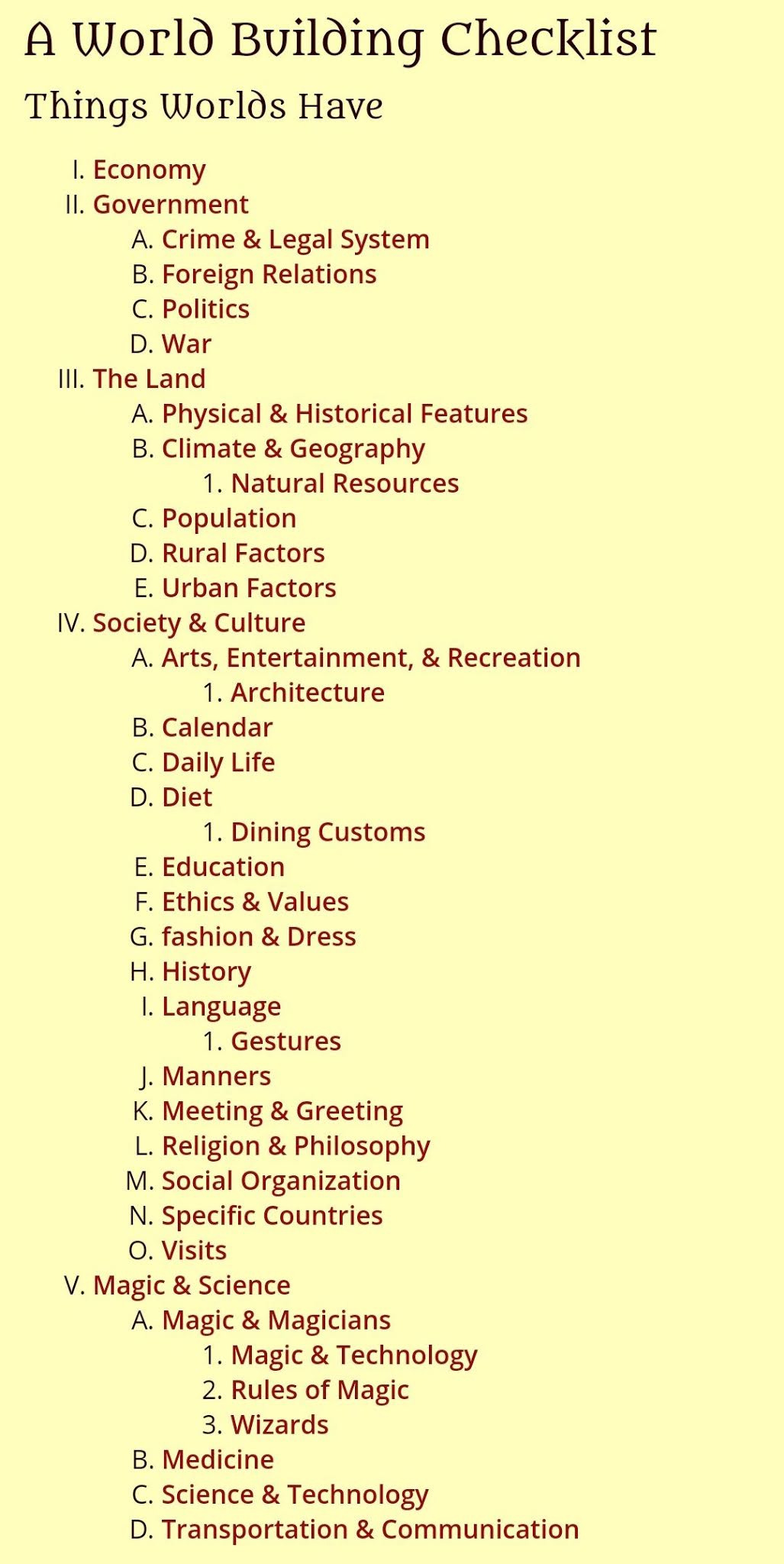
World building, building the set up, setting the rules of how the world functions, natural laws, how magic works, landscape, cultures, politics, religion, cities, countryside, poor people, rich people, all that kind of things. Not just drawing maps, even though that helps a lot.


Thursday, October 8, 2020

NaNoPrepMo - build a reward box or wishlist

Now, actually I don't believe in reward systems, but what ever encourages and enables you to write your 50.000 words is good, so try this. It might work.

Christy Kimmerly's reward surprises


This is what BrightlyK said about rewards:

I’ve been thinking a lot about what rewards might be helpful. I’m steering clear of food-based rewards.
Some rewards I gave myself in October:
Some rewards I’ve lined up for myself in November:
- how to thrive in November
 This is what Emma Kate did:


 NaNoWriMo Reward Calendar - here's you get something small every day when you have finished the day's work, with specials for the end of every week.

5 Ways to Reward Yourself During NaNoWriMo
 
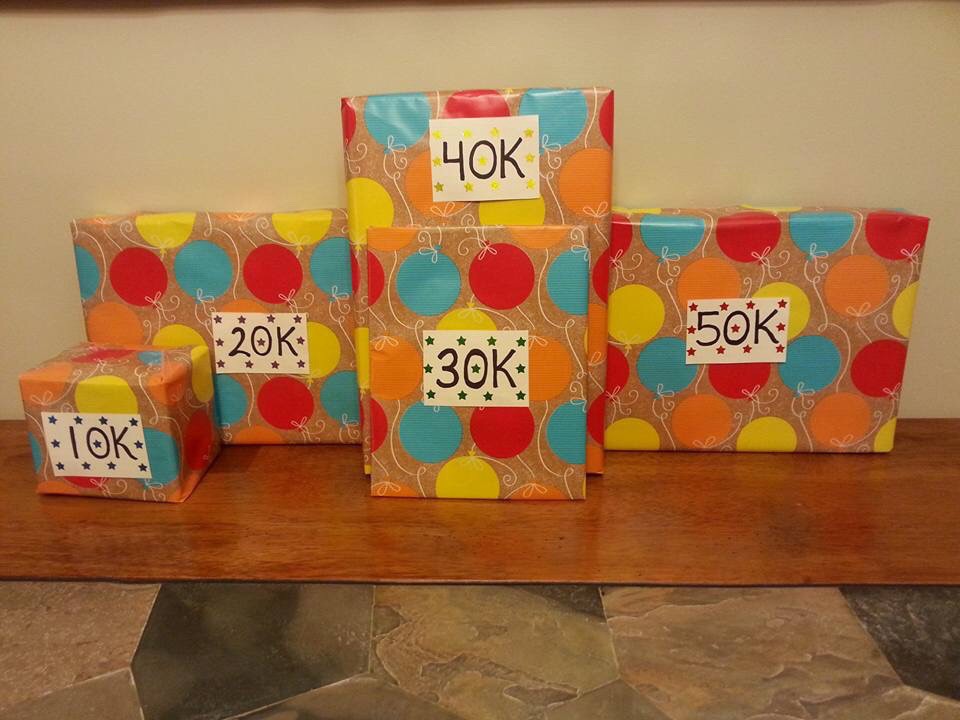
I think I'd like to have some sort of DIY "book subscription box" for ever 10.000 words
 

Wednesday, October 7, 2020

NaNoPrepMo - Research

You have heard the "write what you know". It doesn't mean that you should only write about things you know right now, it means that you should learn to know things you want to write about.

One of my biggest problems with  Shadow of Night by Deborah Harkness is the sloppy (or nonexisting) research. It is especially important when one writes historical novels, or novels set in history. It is really easy to find out what people wore, how they lived, what they ate, and all that kind of stuff, so it's inexcusable to make stupid mistakes in this. You can bet some of your readers (not just one!) will know about these things. Don't write about how corsets are awful if you have never worn a corset (and a corset that has been fitted to you, put on and used properly). Don't say people can't move or bend or breathe in corset, because people can. The easiest way to "research" about history is to find a SCA or another historical re-enactment group close to you and discuss with people. Let them revise your draft, ideas, thoughts and prejudices.

The same goes with everything else in your book. You can, of course, just copy an exciting description of a battle, if you don't know anything about a battle, but you can also count on that you will get caught. Someone will know exactly where you copied it from, and what's the problem with it. Research is your friend. Research everything you don't know. Just think about something you love doing, something you are good at, and how people can mess it up in books. Like knitting, baking, riding, archery, dancing, hunting, running... what ever it is. You know exactly what I'm talking about.
(Unless you don't, in which case, just ignore research and write what ever you want. It works for a lot of popular authors, so why would you need to bother.)

Top 7 Tips For Researching Your Novel

How To Research Your Novel … And When To Stop

How to Research Your Novel Effectively

How to Research a Novel: 7 Tips 
 
*Print or prep any research and notes you'll need

*Bookmark useful sites and hashtags for quick reference

Tuesday, October 6, 2020

NaNoPrepMo - Characters

Write character sheets for your characters.

The character’s name
A one-sentence summary of the character’s storyline
The character’s motivation (what does he/she want abstractly?)
The character’s goal (what does he/she want concretely?)
The character’s conflict (what prevents him/her from reaching this goal?)
The character’s epiphany (what will he/she learn, how will he/she change?
Expand the one-sentence summary into a one-paragraph summary of the character’s storyline

What you love about characters? Who are your favorite characters and why?
 
What do you hate about characters? Who are your least favorite characters and why? 
(And I don't mean your favorite characters to hate, but the characters you find boring, uninteresting, you wish didn't exist. Find out why, so that you can avoid making that mistake.)

Remember the characters' development arcs.

I seriously recommend Randy Ingermanson's How to Write a Novel Using the Snowflake Method, if you can find it. The homepage gives you all the necessary information, but the book really made me understand what he means. He explains his method as a story of Goldilocks who wanted to write a novel, but all she had was "The", so she went to a writing convention and joined a class lead by Baby Bear - he leads you through all the steps using Goldilocks' novel as the example, and it's so inspiring and informative - works for me :-D


Monday, October 5, 2020

NaNoPrepMo - Synopsis

What ever you call them, synopsis, summary, blurb, logline, one-sentence pitch... I want you to know your story so well that you can write all and any of these quickly and easily, that you have this clear for you. Use this day to play with this. Google "how to write..." all of these, and test the advice.

The 20 word synopsis from the Snowflake method
The full paragraph synopsis from the Snowflake method
You write the book synopsis these links are talking about.

"A 500-word long spoiler for your entire novel. Every major plot twist. Every major character. Any big turning point. Your big climactic scenes. They’re all there, briefly, succinctly and (yes) a little drily narrated."

7 Keys to a Great Pitch

How to Write an Elevator Pitch


Saturday, October 3, 2020

NaNoPrepMo - planning and outlining

So - yesterday we worked on the idea, the story and the plot.
Today we'll put it together.
 

It really is this simple: take your favorites and use them. Take you favorite genre, take your favorite characters, main, side, antagonists, protagonists, primary, secondary, tertiary characters, sidekicks, background characters, supporting, minions, what you have. Take your favorite plot, plot twists, obstacles and conflict, clichés and tropes, take your favorite dialogue and quotes, take your favorite setting, POV, style, theme, literary devices, pacing, patterns, tone, writing, language, characters, descriptions, motifs and moods, narration, exposition, action and so on. Elements of the story, how ever you define them.

This is just a list of ingredients. It is you who puts them together in the way only you can. No-one else will write the same book with these ingredients.

There is no "bad" elements. You can write a good book by doing every "don't!" thing you have ever read. You can take the most hated elements and write something good with it. A lot of people like clichés. That's safe, familiar, enjoyable, comfort food. I mean, your grilled cheese isn't gourmet food, even if one tries to make it so, and it isn't supposed to be, but it can be the best damned sandwich you've ever eaten, just the thing you want, need, grave for.

There is only one "don't" you should actually never do. Don't plagiarize. Read about the Cassandra Clare plagiarism case, and learn from that. It is totally fine to be inspired by all the amazing writing around you, in tv shows and books, it's totally fine to love quotes and want to use them. It is not fine to just take a quote and make your character say it, especially if you don't know where it came from, especially if you "find" it in your notebook and you KNOW you have been collecting quotes from books your whole life... You could make your character say "I heard someone say one day, when fighting monsters one has to be very careful not to be a monster oneself." "I used to be afraid of the dark, but then I read something like "I have loved the stars too dearly to be afraid of the dark", and after that I think of stars when I get scared, and it sooths me." Or something like that. I mean, you don't need to know where the quote comes from, just mark that it's not your words. A couple of words, a quote, a sentence is quite OK to use.

Another thing, I read somewhere about a little trick movie directors use. They "set" the imagery into music, they use some music as background of their "vision". Now, a lot of directors use existing movie soundtrack, and there famous pieces, because they work. Then they give the movie to the composer and ask them to give them music that fits the imagery, and they will expect the piece they used - which they of course cannot get, because that music is copyrighted and all that jazz. So the composer is basically forced to compose something that sounds the same but isn't the same, and that's really boring. The director should have taken a couple of music pieces, given them to the composer and asked for something similar, and then used the original composed piece as the background music to "compose" the movie.

It's fine to write "fan fiction". Someone wrote several books about Barry Trotter, where all the characters were badly disguised versions of the original ones, and he got published, and not sued for plagiarism or copyright violations, so there's that. A lot of people think this kind of "humor" is funny. I would prefer original works, when it is so easy to do, but, hey, Pride and Prejudice and Zombies exist, too, and he says he copied the original, added his own writing, changed the original to fit the zombie idea, and that's basically it. I hate that book as well, but - it's a book, it got published, go for it. Maybe someone else likes your parody of something popular as well. I know I enjoyed the YouTube spoofs of Twilight.

Anyway, the most important part of your story is the story. It's not the same thing as plot. Plot is a "story element". Plot tells what happens in the story, but it's not the story.

It is important to have a plot, and a plot helps you tell the story.

Most important element of the story are the characters, because the story is what happens to the characters, the characters drive the story, why they do what they do, how they react on what happens, how they feel and think about what happens, how the events change them, what they learn on the journey, that is what the story is. 

Take "It Happened One Night". The plot is "a rich girl tries to run away from her overprotective father, meets a journalist, they have adventures, fall in love with each other."
The story is about why this rich girl runs away, how she thinks about it, why she makes the choices she does, why the journalist happened to be in the bus, how they react on things that happen during the adventures, what made them fall in love with each other... emotions, reactions, thoughts. People. The story is what makes the reader put themselves in the shoes of the characters, put themselves in the story, feel, react and think with the characters. It is this that makes the reader love the story. It is this why "bad" books sell. 

About the other story elements. (They are all important, though if you have a good story, but the novel is lacking in other elements, you still have a story.)

Genre is important. A lot of people use the genre as some sort of a backdrop, when the genre gives you a lot more. If you choose a genre, write something that doesn't fit in any other genre. It is OK to write "romantic fantasy" or "fantasy horror", of course, but then you should have the necessary elements from both genres. And genres do have "necessary elements". I like fantasy, and to me, part of fantasy is the element of wonder. I want to be awed. I want to be fascinated, charmed, enthralled, enchanted... this is why horror fantasy doesn't quite work for me, because horror (as Stephen King said) has to horrify, terrify, and disgust, and fantasy shouldn't.
Think about this a little. Why do you classify books into genres? And what do you think is essential to make the book belong to a genre?
Diana Gabaldon says Outlander isn't Romance. I say it is, because everyone who loves the book loves it because of the love story between Claire and Jamie.
Nicholas Sparks says he doesn't write Romance. I say he does, because all his stories are about love.
Terry Goodkind said he didn't write Fantasy. I say he does, because he has a typical high fantasy setting with magic, monsters, and medieval setting.
I don't understand why authors dislike the genre they write in, that made them famous? There isn't anything wrong with any of the genres.

Genres of writing and why they matter
 
Look up the elements of a story and read about each one, and think about them a little. What do you want to do with them? You are the magician here. It's your show.

Choose a plot formula (or not. What ever suits you.) I think it's nice and helps with the writing, but a lot of people think it makes the writing formulaic and stiff.

Free fiction writing template outline by chapter


* Outline the story

Outline the story like a subway map

How to Easily Outline Your NaNoWriMo Novel During Preptober 
 
Remember that this is supposed to be YOUR story. You are not to copy your favorite, you are to use them. Do you understand the difference? You are to write a book you want to read, not a book that has already been written.

Your target reader is you.

If your favorites are all or most from one and same book, book series or author, mix it up a little and choose several favorites, from different books and authors. (Though it seemed to work fine for Cassandra Clare and E.L.James...)

(Also, try to find Story Genius by Lisa Cron, to realise that elements of the story are just the wrapping, the cherry and the bow on top of the real thing, the story. Which is why 50 Shades of Grey, Twilight, Da Vinci Code and Outlander are so big today. Storyteller will always beat the writer in selling books...)


Friday, October 2, 2020

NaNoPrepMo - Idea

pick a story idea - now, plot is not a story. Plot is what happens, story is why it happens, and what it does with the people in it.

7 Ways to Decide Which Story Idea You Should Write Next

5 shortcuts to getting an idea for a novel

29 plot templates

The 36 Dramatic Situations

The 7 Basic Plots

Write down why you want to write this story. Why does it matter? Why does it interest you? Does it cause an emotional reaction in you? If not, why would anyone be interested in it?

If you really don't have any ideas, take some from your favorite books. It doesn't matter if you do a retelling of an old fairytale, or a new YA novel. Ideas cannot be copyrighted. If you tell the same story with your own words, it will be your story. 

Here's Preptober Tips & 100 Preptober Prompts for NaNoWriMo Prep
I sincerely urge you to go and read it and answer the prompts, even if you just want to write and don't plan on doing NaNoWriMo.

I was especially struck by "What excites you most about a book that you haven't read yet but you have on your To Read List?"

I have several types of books on my TBR list.
1) recommended by a friend
2) is included in a list
3) is part of a reading challenge
4) I liked the author's other books
5) is said to be like a book I liked
6) the cover looks amazing

then the rest.
- magical realism or fantasy, or based on a fairytale, legend, myth or folktale or something like that
- a indomitable main character who has to solve the problem through sheer will, is determined to make their own destiny and fortune
- promise of a happy ending

"a wild maze of colorful gardens that reaches beyond the imagination. Local legend says that a visitor can gain answers to life’s most difficult problems simply by walking through its lush corridors." 

"Shameless - Rebellious women who changed the world"

"Curiosities of Literature: A Feast for Book Lovers "

"Claudia Miravista loves art but only sees what is on the surface, until the Dutch boy Pim appears in her painting. Pim has been trapped in the world behind the canvas for centuries by a power-hungry witch, and now believes that Claudia is his only hope for escape. Fueled by the help of an ancient artist and some microwaveable magic, Claudia enters the wondrous and terrifying world, intent on destroying the witch's most cherished possession and setting Pim free."

"enjoy an out of this world love story filled with pirates, ugly secretaries, angry housekeepers, Church Librarians, intergalactic cruise ships, flexible yeoman, love, adventure and other oddities."


Thursday, October 1, 2020

NaNoPrepMo - checking the premises

I know, I'm really bad at finishing things, I love challenges, but... uh. I'm a multipotentialite, not a finisher :-D My job is to inspire, not to do. So, I hope I inspire you to write.

Here's some encouragement: following novels were written during NaNoWriMo...
Rainbow Rowell, Fangirl.
Hugh Howey, Wool Omnibus.
Erin Morgenstern, The Night Circus.
Alan Averill, The Beautiful Land.
Jason M. Hough, The Darwin Elevator.
Marissa Meyer, Cinder, Scarlet, and Cress.
Water for Elephants by Sara Gruen.

It's not a bad list. I would love to read yours :-)
(Frankly, I would love to see mine on the list, but considering that I'm 51, I haven't written a book yet, and I have been writing for as long as I can remember - one of my favorite books as kid was written by another 8 years old, so there has never been the idea of "I'm not old enough to be a writer". It's just that I never finish anything.)

What I want you to do today, is to write 1000 words.

We do this to find out your ideal conditions of writing.

It doesn't matter what those words are, you can just as well just copy a text or write a letter or anything. It would of course be best if you were writing an original short story of your own, something as close to what you will be writing in a month as you can get without writing that :-D Because that would be breaking the rules. Though, you can break the rules, no-one will ever know.

I want you to do this, because you need to know what you need to be able to do that.
How do you write best? By hand, by computer, by an old fashioned typewriter? Some other way?
What do you need to do that? Paper, pens, typewriter? Do you have them, do you have enough, if not, where can you get more? Write down what you need to get and plan the date to get it.

What time of the day do you write best? Early in the morning, late at night, middle of the day? Can you arrange your schedule so that you get that time free every day to write? Do you need to talk with your employer, or take the whole month off? Do you need to start waking up earlier to write? Start doing that now, so that you are used to it in November, and know when you need to go to bed.

Do you like background music? If so, what kind? Create your writing playlist. See that your music player is in order.

Do you like to eat or drink something as you write? Now is the time to test different snacks and beverages to find what fuels you best. Stock your storage.

How long time did it take you to write 1000 words? You need to write 1667 words every day for 30 days, so reserve twice the time for writing every day.

But it's good if you get the schedule in order before November. This is the kind of things Preptober is meant for.

Where do you like writing? In bed, by a desk, on the sofa, outside? Test different spaces, and prepare your favorite so that it's ready for you the first on November. Most people will be writing by a desk, and during October you should clean it and organize it so that you can freely use it.

See that you have your plot board and all that kind of things if you use them.

What do you like to wear? See that you have your writing attire ready and in order, with enough backup and clean change, unless you want to wear the same things the whole month.

 Any other things you can think of? Would you like to have fresh flowers at your writing space? A nice picture on the wall? Maybe an inspiration board?


Thursday, October 28, 2010

Muses

"There are only three Muses: one who is born from the movement of water, another who makes sound by striking the air, and a third, who is embodied only in the human voice."
-- Varro

Muses are the origin for such words like amuse, museum and music... and these are the places you should go to find the Muses... what you find amusing, collections of interesting things and things that touch you, make you feel, wake emotions in you...

In Star Trek Deep Space 9 there was a "muse" who inspired people to greatness while nourishing themselves with their life.

Would you change the rest of your life to the chance of creating a masterwork?

You don't need to...

Where do your ideas come from?
Poet's Journal, Part II
Where do your writing ideas come from?
Stephen King's answer (not the warehouse one ;-))
The Idea Store
Where do ideas come from?
Philip Pullman's answer (P.S. Philip, perhaps that was a joke as well...?)
Simon Rose: Where do ideas come from? Part I, II, III and IV